According to the 2021 census, approximately 650,000 people with disabilities live in Nepal. This represents about 2.2 percent of the population. The situation is particularly difficult for
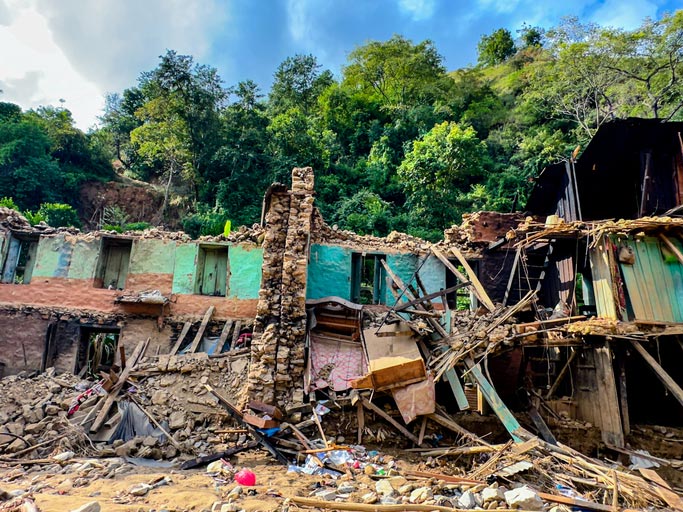
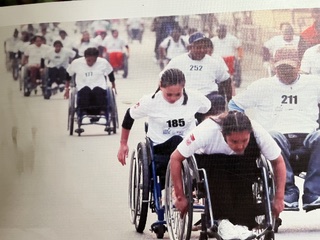
people with spinal cord injuries resulting from falls, traffic accidents, or spinal injuries caused by natural disasters—particularly earthquakes, landslides, rockfalls, or flooding.
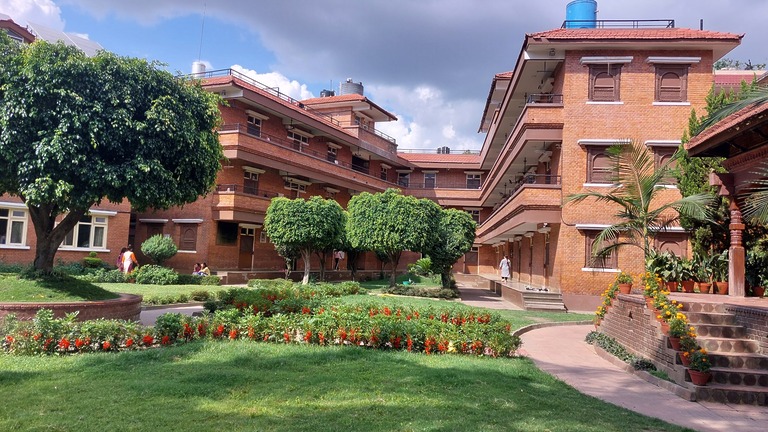
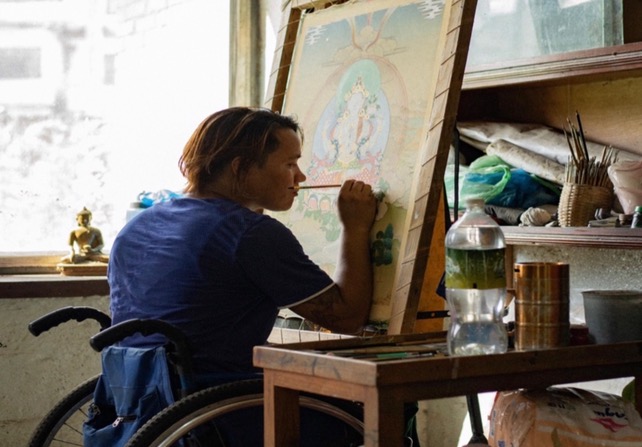
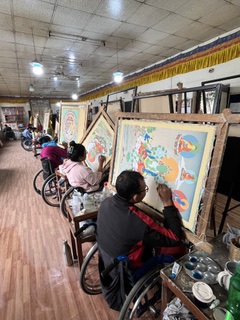
In remote mountain villages, these people have virtually no access to healthcare, mobility, education, or even vocational training. Wheelchairs are virtually unusable on mountain trails. As a result, these people are confined to their homes for the rest of their lives and they require round-the-clock care from their families, which is virtually impossible for their relatives to provide, especially within the cramped living conditions in underserved areas. The local project partner, the B.I.A. Institute (B.I.A.: Bodhisattvas In Action) in Kathmandu, has dedicated itself for many years to helping these people who have been so severely afflicted by fate. The institute brings people with disabilities from the most remote mountain villages to Kathmandu, provides them with wheelchairs and medical care in a barrier-free environment, and provides an education tailored to the needs of people with disabilities. The B.I.A. Institute offers training in nine traditional Nepalese arts and crafts. Training, lodging, meals, and training materials are provided free of charge. And after completing their training, these individuals have a real chance for a fulfilling professional life, social integration, and participation in the
cultural heritage of their homeland.
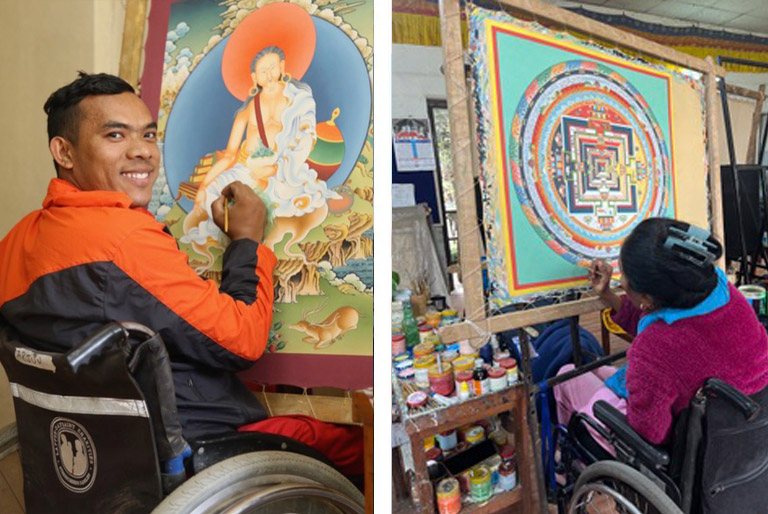
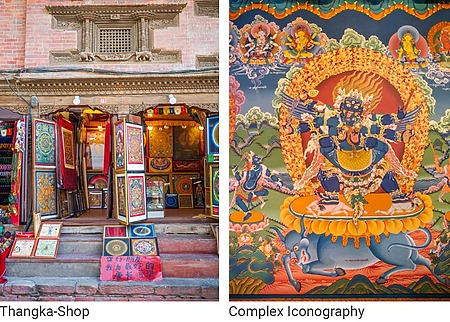
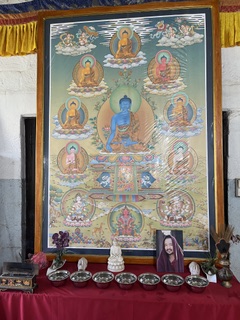
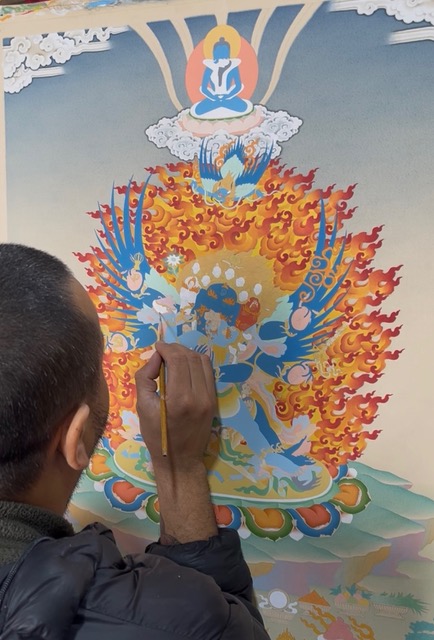
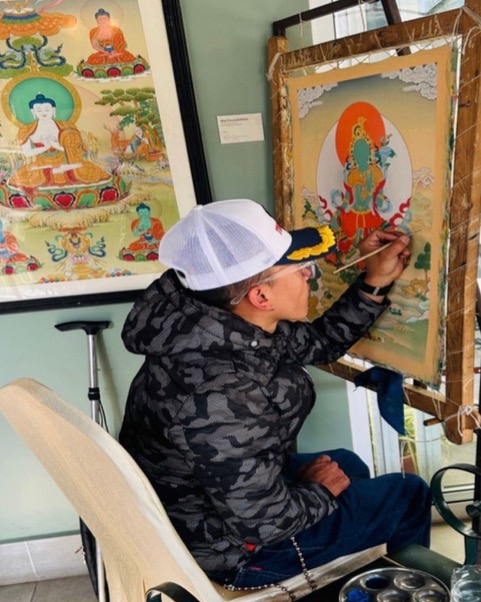
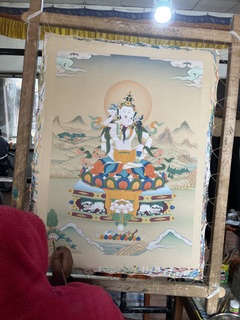
One of these training programs is Thangka painting. A Thangka is a traditional Tibetan Buddhist scroll painting, painted or embroidered on cotton or silk. It serves as an important aid for meditation and the visualization of complex spiritual concepts. Originally developed for nomads in the Himalayas, the paintings are easily to roll up and serve as portable shrines. They are used in monasteries, on household altars, or during ceremonies. In Nepal—and increasingly internationally as well—there is a growing demand from practitioners, enthusiasts, and collectors. Barriers to market entry are high due
to the intensive training, the high level of detail, and the necessary artisanal skills. Although people with paraplegia are physically disabled, they can contribute many qualities that are
prerequisites for this art: patience, concentration, dedication, attention to detail, precision, perseverance, and a commitment to craftsmanship and artistic development. Training to
become a Thangka Painter at the B.I.A. lasts six years, is conducted by experienced masters and involves a daily, step-by-step learning process covering painting techniques, iconography,
sketching, composition, paint preparation, and the application of gold elements. The goal is for students to be able to earn a living as independent thangka painters or teachers.
The Dr. Birk Foundation, together with its German partner, the Chogyal Rinpoche Association, enables 7 Thangka Painters to complete the full 6-year training program.
Target Group
People with disabilities, particularly those with paraplegia, from remote regions of Nepal.
High risks: Earthquakes, Landslides, Flooding
6 years of training in Thangka-Painting
Measures
The Dr. Birk Foundation provides funds for:
- Teachers’ salaries,
- Medical care for the students,
- Necessary materials and supplies for Thangka painting,
- Meals and food for the students,
- Accommodations,
- Mentoring programs and
- Physical and mental training adapted to the needs of people with disabilities.
Duration
2027 – 2032
Unsere Projektpartner
Chogyal Rinpoche Association e.V., Berlin, Germany
B.I.A. Institute, Kathmandu, Nepal
Weitere Projekte
-
Value creation in coffee cultivation
Doi Saket, Thailand 2025 - 2029
Development and establishment of a comprehensive regional coffee production chain with modern facilities.Read more -
Training on demonstration fields
Tamil Nadu, Indien 2025 – 2026
At two training centers in Tamil Nadu, 900 people are receiving practical training in agriculture and marketing—an opportunity for better incomes and sustainable future prospects.Read more -
Computer learning center
Fang, Thailand 2025
New prospects for children from the Thailand/Myanmar border regions through modern learning tools: computers and online courses.Read more -
Team training at the children's home
Chiang Mai, Thailand 2025
This training project involves developing a practical training concept that specifically addresses the everyday work requirements of employees at the Raintree Foundation's children's homes.Read more -
Education at the monastery school
Pharping, Nepal 2025 - 2027
Ensuring continuity of teaching and quality of education through qualified teachers for grades 4 to 8.Read more -
Rescue from coercion and trafficking
Mumbai, India 2026 - 2028
Funding of mobile teams in India which free and rescue minor girls from human trafficking and forced prostitution, funding of vocational training for the rescued girls and retransfer to their familiesRead more -
Learning Centers for Preschoolers
West Bengal, India 2026–2029
70 children between 2 and 7 years old from poor living and sanitation areas in West Bengal, India, are cared for and prepared for school in 2 learning centers.Read more -
Refuge for trafficked girls
Kathmandu, Nepal 2027 - 2029
30 girls and young women, victims of human trafficking, get support to either graduate in school or get a certified vocational training in the hotel and restaurant industry.Read more -
Obstetric Fistulas: Prevention and Care
Bajura, Nepal 2027–2029
Outreach program in western Nepal focused on education, training, and care for women affected by obstetric fistulas and their stigmatizing and life-limiting consequences.Read more